The most expensive mistake with a slab leak is guessing where it is. Open the wrong section of floor and you pay for more concrete, more flooring and more days without a kitchen, and the leak is still running. Detection comes first, and it decides everything that follows.
Signs that it's time for detection
- A warm or hot spot on tile, laminate or vinyl
- The water meter moving with every tap and appliance off
- A water bill climbing with no change in use
- Damp carpet or swollen baseboards along a wall with no fixture
- The sound of running water in a quiet house
- On a well: the pump cycling when nobody is using water
How a slab leak is located
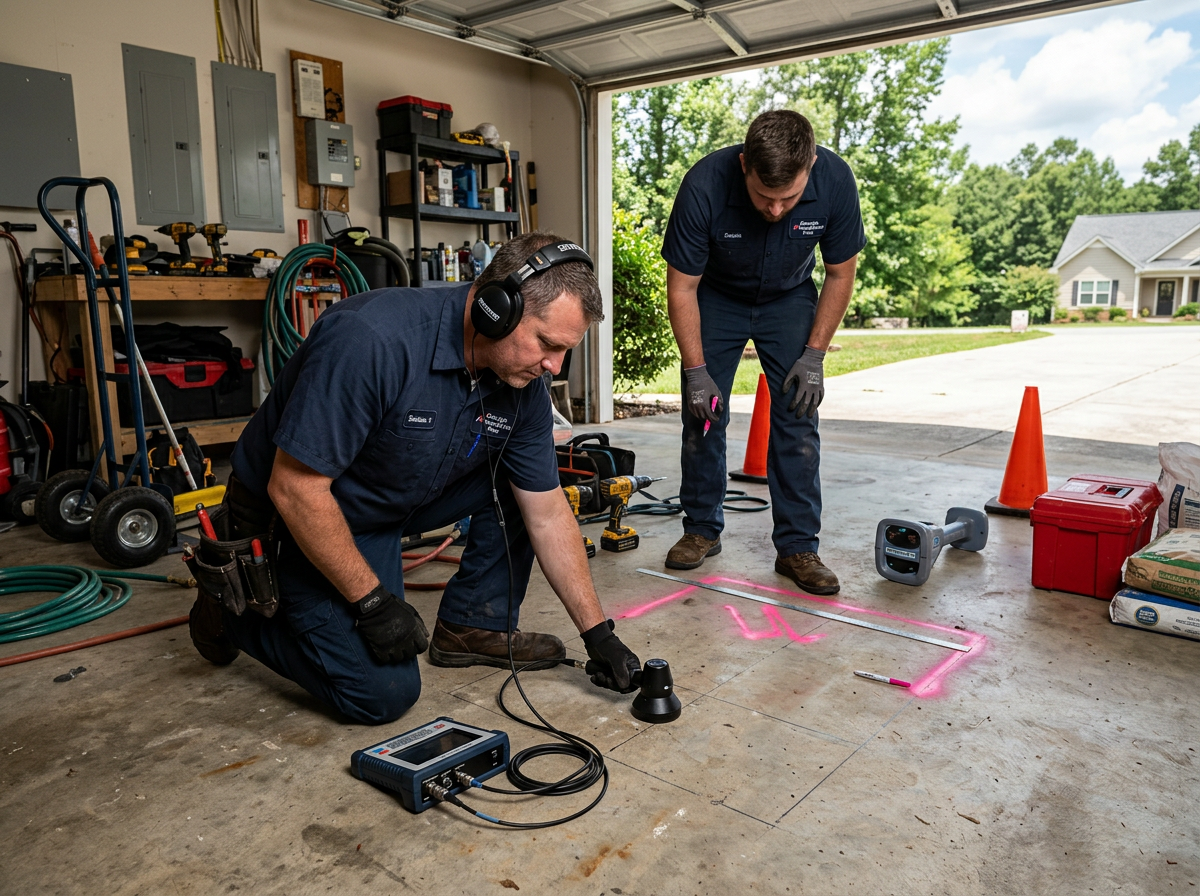
Detection is done from the surface. Nothing is broken until the leak is found.
1. Confirm there's a leak. The meter is checked with everything off, and obvious causes such as running toilets, dripping spigots and irrigation are ruled out.
2. Isolate the lines. Hot and cold supply lines are shut off and pressure-tested separately. That tells the plumber which line is leaking, and whether it is inside the house or on the service line outside.
3. Listen. Acoustic equipment picks up the sound of pressurised water escaping through the concrete. The sound is loudest directly above the break.
4. Look for heat. For a hot water leak, a thermal camera shows the heat trail spreading through the slab.
5. Mark it. The leak is marked on the floor, so any opening is small and in the right place.
Why detection matters more in red clay
Around Cohutta and north Whitfield County, slabs sit on dense red clay. Clay doesn't let water soak straight down, so a leak often travels along the outside of the pipe and surfaces somewhere else: carpet wet by one wall, or a damp patch outside. The wet spot is frequently not above the break. Acoustic and thermal location find the pipe, not just the water.
After the leak is found
Once the leak is marked you get the options, explained before anything is opened. A small opening in the slab to repair the pipe at that spot, or a reroute that runs a new line above the slab and leaves the floor alone. If the leak is on a hot line, see hot water line slab leak repair.
Call for a quote on [slab leak repair](/) detection for your home.
Slab Leak Detection Services We Offer
✓Line Isolation and Pressure Testing
Confirms which line is leaking and rules out fixtures.
✓Acoustic Leak Location
Listens for the leak through the concrete.
✓Thermal Imaging
Finds the heat trail of a hot water leak.
✓Meter Test
Shows whether water is moving when every fixture is off.
How it works
- 1
Meter check
Confirms water is leaving the plumbing with everything off.
- 2
Line isolation
Hot and cold lines tested separately to find which one leaks.
- 3
Acoustic and thermal location
Pinpoints the break through the concrete.
- 4
Marking and options
Leak marked; repair choices explained before any work.