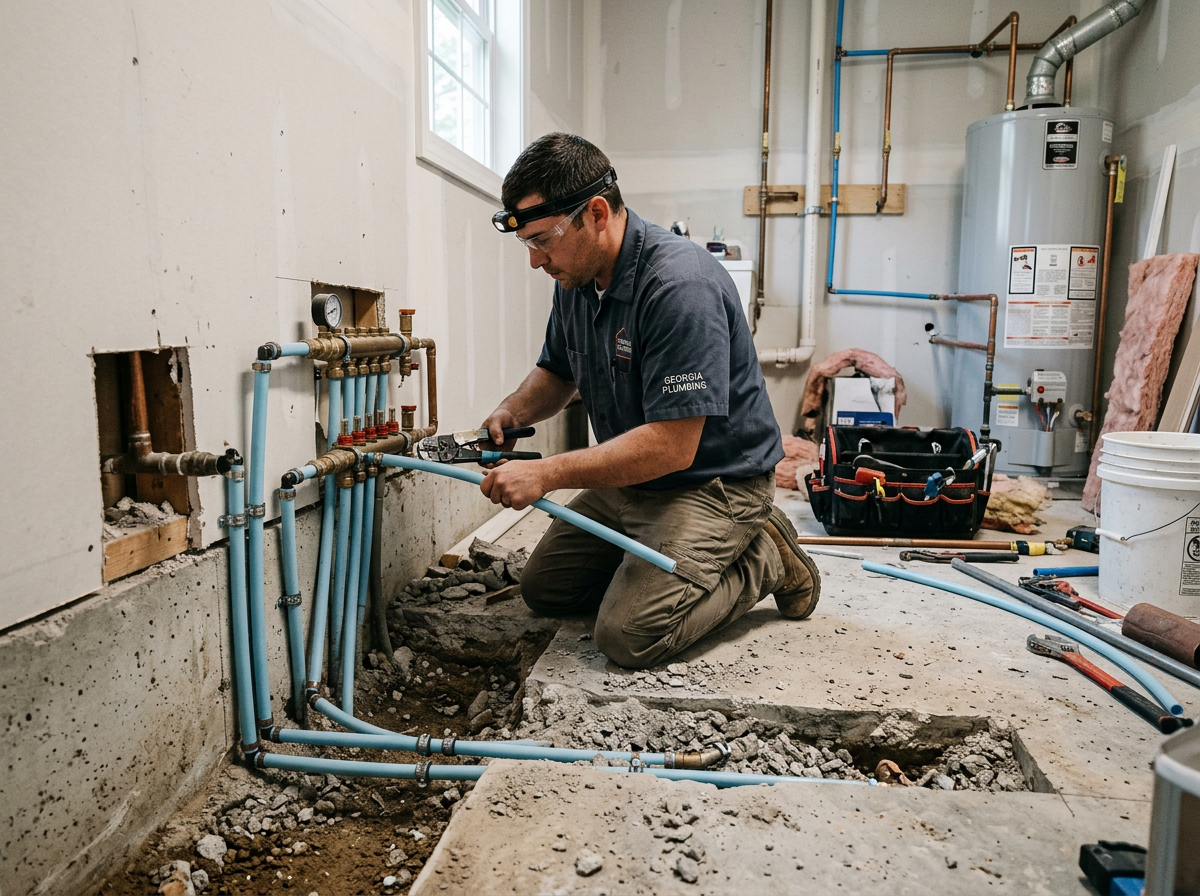
When a water line under a slab fails, the rest of that pipe is usually the same age and has been through the same years of wear. Fixing one spot can simply move the next leak a few feet along. A reroute takes a different approach: it leaves the slab alone.
What a reroute is
The old line under the slab is shut off and taken out of service. A new line is run above the slab instead: from the supply, up into the attic, across, and down inside the walls to each fixture it serves. The floor is not opened at all.
Reroute or whole-house repipe
- Single-line reroute. Only the leaking line (often the hot line to the kitchen or a bathroom) is moved above the slab.
- Whole-house repipe. All supply lines are replaced. It makes sense when the house has had several leaks, or the pipe material is known to fail.
When a reroute makes sense
- This is the second or third leak on the same line
- The home is older and the pipe under the slab is original copper
- The leak is under tile, hardwood, cabinets or a shower
- One long run under the floor feeds several rooms, which is common in ranch-style homes around Cohutta
For a first leak on newer pipe in an easy spot, a spot repair through the slab can be the simpler choice. The plumber compares both for your layout.
What the work involves
Small access openings are cut in walls and ceilings at each fixture and along the route. The new line is run, connected, and pressure-tested, and the old line is capped. The openings are then patched. Material choices such as PEX or copper are explained for your house.
It starts with detection
Even for a reroute, slab leak detection confirms which line is leaking, so only the right line is moved. For hot lines specifically, see hot water line slab leak repair.
Call for a quote on a reroute or repipe, or on [slab leak repair](/) in general.
Slab Leak Repiping & Reroute Services We Offer
✓Single-line Reroute
Moves one leaking line above the slab.
✓Whole-house Repipe
Replaces supply lines throughout the home.
✓PEX or Copper Options
Material choice explained for your house.
How it works
- 1
Confirm the line
Detection shows which line is leaking.
- 2
Plan the route
Path through attic and walls agreed.
- 3
Run and connect
New line installed and pressure-tested.
- 4
Cap and patch
Old line capped; wall openings patched.